 150
Argan Oil for the Face: Benefits, How to Use It, and Which Skin Types It Suits
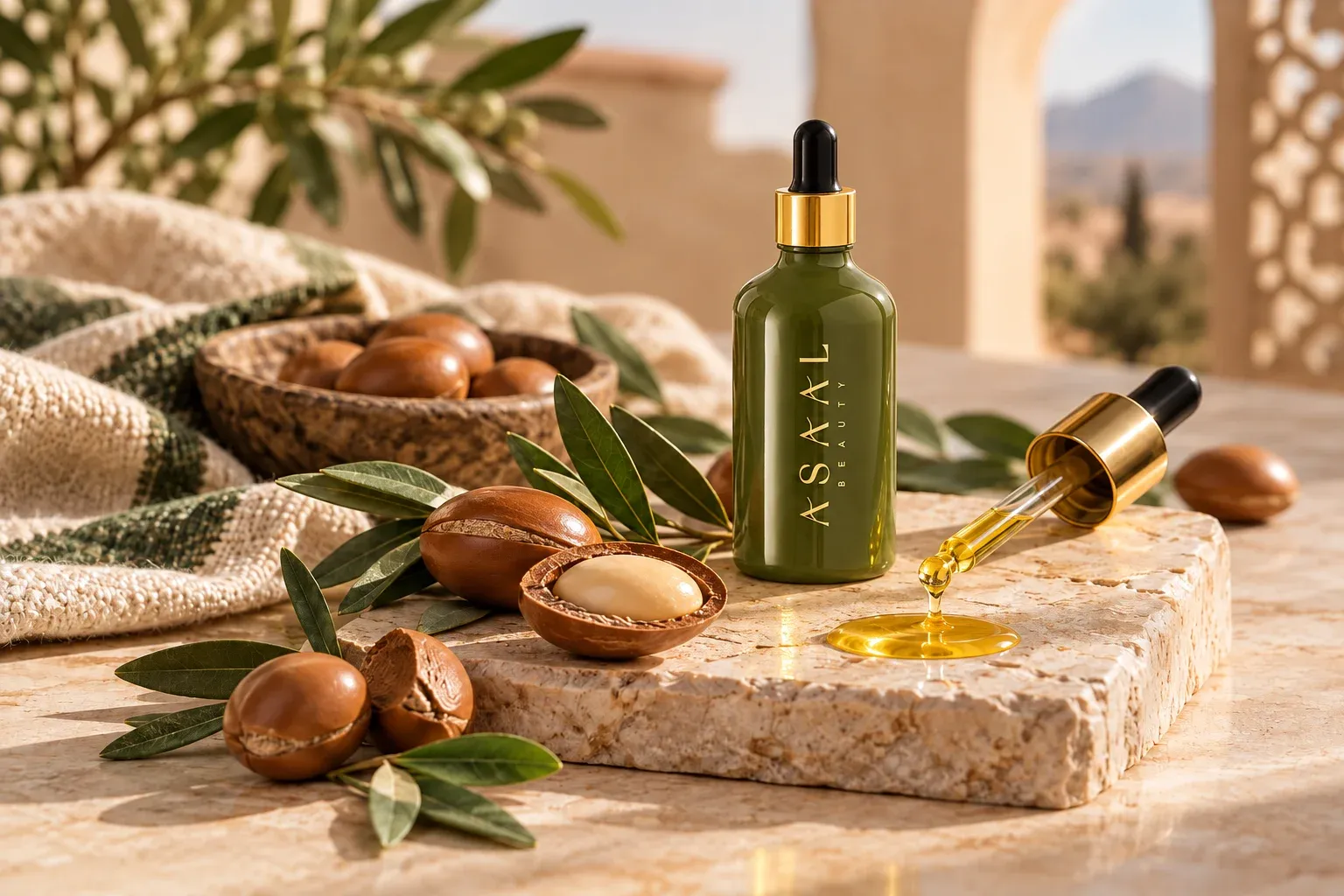
Explore argan oil's facial skincare benefits, application steps, suitability for different skin types, and what scientific research actually supports.
Argan Oil for the Face: Benefits, How to Use It, and Which Skin Types It Suits
Can you use argan oil on your face every day? Is it suitable for oily skin, or is it better reserved for dry skin? And where does it fit in a skincare routine that already includes a moisturizer?
Moroccan argan oil has become a familiar ingredient in both haircare and skincare. Naturally containing fatty acids and vitamin E compounds, it is valued for its emollient properties and its ability to leave skin feeling softer and more comfortable.
However, not every skin type needs a facial oil, and argan oil should not be considered a treatment for every skin concern.
In this guide from Asaal Beauty, we explore the benefits of argan oil for the face, how to apply it, how different skin types may respond, and what scientific evidence actually supports.
Is argan oil good for your face?
Argan oil can be a useful addition to facial skincare, particularly for normal or dry skin.
It works primarily as an emollient, helping soften the skin's surface and reduce moisture loss. When used in small amounts, it may complement an existing moisturizing routine.
However, oily or acne-prone skin may not benefit from adding an oil. Individual tolerance matters, and there is no guarantee that a particular facial oil will suit everyone.
The key distinction: Argan oil is a cosmetic skincare ingredient. It is not a substitute for dermatologist-recommended treatments, a suitable moisturizer, or sunscreen.
What makes Moroccan argan oil special?
Argan oil is extracted from the kernels of the argan tree (Argania spinosa), which grows naturally in Morocco.
Its composition includes:
- Oleic acid: A fatty acid naturally present in argan oil.
- Linoleic acid: Another fatty acid contributing to the oil's emollient characteristics.
- Vitamin E compounds (tocopherols): Naturally occurring compounds with antioxidant properties.
Together, these components help explain argan oil's popularity in skincare.
However, the presence of antioxidants does not automatically establish that an oil can erase wrinkles, treat pigmentation, or cure acne.
Benefits of argan oil for facial skin
1. Helps reduce the feeling of dryness
One of argan oil's best-supported cosmetic uses is helping dry skin feel more comfortable.
Its emollient properties can soften the skin's surface and help limit moisture loss.
A clinical study published in 2015 followed 60 postmenopausal women and reported improvements in certain skin hydration measurements associated with argan oil use.
Importantly, the measurements were taken on forearm skin. The study does not prove identical results on every type of facial skin.
2. Improves skin softness and texture
A small amount of argan oil may make dry areas feel smoother and softer.
This is particularly relevant when skin feels rough or uncomfortable after cleansing or during dry weather.
However, improving surface texture is not the same as treating an underlying skin condition.
Persistent dryness, itching, cracking, or inflammation may require a different approach.
3. Complements a moisturizing routine
Facial oil and moisturizing cream are not necessarily interchangeable.
Moisturizers may contain ingredients that attract and retain water, along with components that soften and protect the skin.
Argan oil primarily provides emollient benefits and may help reduce moisture loss.
For dry skin, applying a small amount of oil after a suitable moisturizer can be an optional extra step.
4. Offers versatile care beyond the face
Argan oil can also be used on dry areas of the body, hands, elbows, nails, and cuticles.
This versatility makes it attractive to people who prefer a simple routine with fewer products.
Is argan oil suitable for every skin type?
The answer depends on individual skin needs and how the skin responds to the oil.
Argan oil for dry skin
Dry skin may benefit from the additional softness that argan oil provides.
A small amount can be applied after cleansing and moisturizing, particularly in the evening or whenever the skin feels uncomfortable.
For severe dryness, however, an appropriate moisturizing cream may be more important than facial oil alone.
Argan oil for normal skin
Normal skin may tolerate occasional argan oil use, particularly when extra softness is desired.
It is not an essential step for everyone.
The amount and frequency should reflect individual needs.
Argan oil for combination skin
Combination skin typically includes both oily and dry areas.
Instead of applying oil evenly across the entire face, try a small amount only on areas that feel dry.
If increased shine, clogged pores, or new breakouts appear, discontinue use.
Argan oil for oily skin
Does oily skin need argan oil?
Not necessarily.
Skin that already produces significant oil may not benefit from an additional facial oil.
For acne-prone skin, dermatologists generally recommend moisturizers labeled oil-free or non-comedogenic.
Argan oil should not be assumed to be universally non-comedogenic, and there is insufficient clinical evidence to recommend pure argan oil as a treatment for acne or excess sebum production.
Argan oil for sensitive skin
Some people with sensitive skin may tolerate pure argan oil, while others may experience irritation.
Natural ingredients are not automatically allergy-free.
Patch testing is advisable before introducing any new skincare product.
If you have active eczema, inflamed skin, or a known allergy, consult a dermatologist before experimenting with a new facial oil.
How to use argan oil on your face: Step by step
A simple approach is usually best, especially when introducing argan oil for the first time.
Step 1: Cleanse your face
Start with a gentle cleanser suitable for your skin type.
Pat your skin dry using a clean, soft towel.
There is no need to exfoliate before every application of facial oil.
Step 2: Apply moisturizer when needed
For dry skin, apply a suitable moisturizer first.
Argan oil can then be used as an additional emollient step rather than automatically replacing the moisturizer.
Step 3: Start with a small amount
Begin with one drop to assess how the oil feels.
Asaal Beauty's general skin-use instructions recommend applying 2–3 drops to clean, dry skin and massaging gently until absorbed.
For facial use, a smaller amount may be sufficient, particularly when layering the oil over moisturizer or applying it to limited areas.
Step 4: Distribute gently
Spread the oil lightly with clean fingertips.
Avoid excessive rubbing and direct contact with the eyes.
If only certain areas feel dry, focus on those areas rather than applying more oil than necessary.
Step 5: Observe your skin's response
Pay attention to redness, itching, discomfort, or new breakouts after introducing the oil.
If it suits your skin, continue using an appropriate amount as needed.
Applying more oil does not necessarily produce better results.
Should you apply argan oil in the morning or at night?
Argan oil can be used in either routine, depending on skin needs and preference.
At night: This may be a convenient time to add a facial oil, especially for skin that feels dry.
In the morning: A small amount may be used if needed, but sunscreen should remain the final protective skincare step.
Argan oil is not a reliable alternative to sunscreen and should never be used as a substitute for UV protection.
Can argan oil treat acne, pigmentation, or wrinkles?
Argan oil is widely discussed online, but some of its claimed effects go beyond what current clinical research establishes.
Does argan oil treat acne?
Argan oil is not a proven acne treatment.
Although moisturizing may be an important part of managing acne-prone skin, this does not mean that applying pure argan oil will clear breakouts or prevent new ones.
Can it fade acne scars or dark spots?
There is insufficient clinical evidence that argan oil alone can reliably fade persistent acne marks, melasma, or hyperpigmentation.
These concerns may require specific skincare ingredients or professional treatment.
Does argan oil remove wrinkles?
Improved moisturization may make skin appear smoother, but that is different from removing established wrinkles or reversing skin aging.
Current evidence does not support promising those results from argan oil alone.
Common mistakes when using argan oil on the face
Several habits can make facial oil less suitable for a skincare routine.
- Applying too much: Excess oil can leave an uncomfortable greasy finish without providing additional benefits.
- Ignoring skin type: A routine that suits dry skin may not suit oily or acne-prone skin.
- Replacing every moisturizer with oil: Very dry skin may still need a cream containing water-binding ingredients.
- Introducing several products at once: This makes it harder to identify the cause of irritation or breakouts.
- Expecting medical results: Argan oil should not replace treatment for persistent skin conditions.
How to choose argan oil for skincare
When choosing argan oil for cosmetic use, consider the product's ingredient information and intended use.
Useful factors include:
- Whether the oil is pure or blended with other ingredients.
- The clarity of its ingredient list and usage instructions.
- The extraction method, such as cold pressing.
- Whether the product is intended for cosmetic skin use.
- The amount that suits your routine.
Asaal Beauty Organic Moroccan Argan Oil is described as 100% pure, cold-pressed Moroccan argan oil with a lightweight feel. It is designed for use in hair, skin, lip, and nail-care routines.
It is available in two sizes:
30 ml: A practical option for trying the product, occasional use, or travel.
100 ml: A convenient choice for more frequent use across hair and body-care routines.
As with any facial oil, suitability ultimately depends on individual skin tolerance.
Frequently asked questions about argan oil for the face
Can I use argan oil on my face every day?
Daily use may be suitable for skin that tolerates the oil and benefits from it. However, it is not necessary for every skin type, particularly oily skin.
How many drops of argan oil should I use on my face?
Start with one drop and increase only if needed. The ideal amount depends on your skin type, application area, and other products in your routine.
Will argan oil clog pores?
There is no universal guarantee that an oil will not clog pores. Acne-prone skin may do better with a moisturizer specifically labeled non-comedogenic.
Should I use argan oil before or after moisturizer?
For dry skin, argan oil can be applied after moisturizer as an optional step to help reduce moisture loss. If using the oil alone, follow the product's directions.
How long does argan oil take to show results on the face?
The skin may feel softer shortly after application. However, there is no reliable universal timeline for long-term results, and responses vary by skin type and overall routine.
Does argan oil lighten skin?
There is insufficient evidence that argan oil alone can change natural skin color or reliably treat pigmentation.
Can I apply argan oil around my eyes?
Avoid direct contact with the eyes. Do not apply it close to the sensitive eye area unless the product's instructions specifically support that use.
How do I patch-test argan oil?
The American Academy of Dermatology recommends testing new skincare products on a small skin area twice daily for seven to ten days before broader use. Discontinue use if irritation develops.
A thoughtful skincare routine starts with understanding your skin
Argan oil can be a useful addition to skincare, particularly for people looking to improve softness and reduce the feeling of dryness.
But effective skincare is not about using the largest number of products. It is about choosing products that match individual needs and using them consistently and appropriately.
Explore Asaal Beauty Organic Moroccan Argan Oil, available in 30 ml and 100 ml sizes, for versatile everyday hair and skin care.
For another practical use, read our guide to Argan Oil for Dry Hair: Benefits and How to Use It Daily.
Asaal Beauty — Moroccan-inspired care, combining simplicity with attention to detail.
Sources and further reading
Curated Picks for Your Ritual
Handpicked recommendations to complete what you started in this article.
