150
How to Use Moroccan Black Soap with a Kessa Glove: A Step-by-Step Home Guide
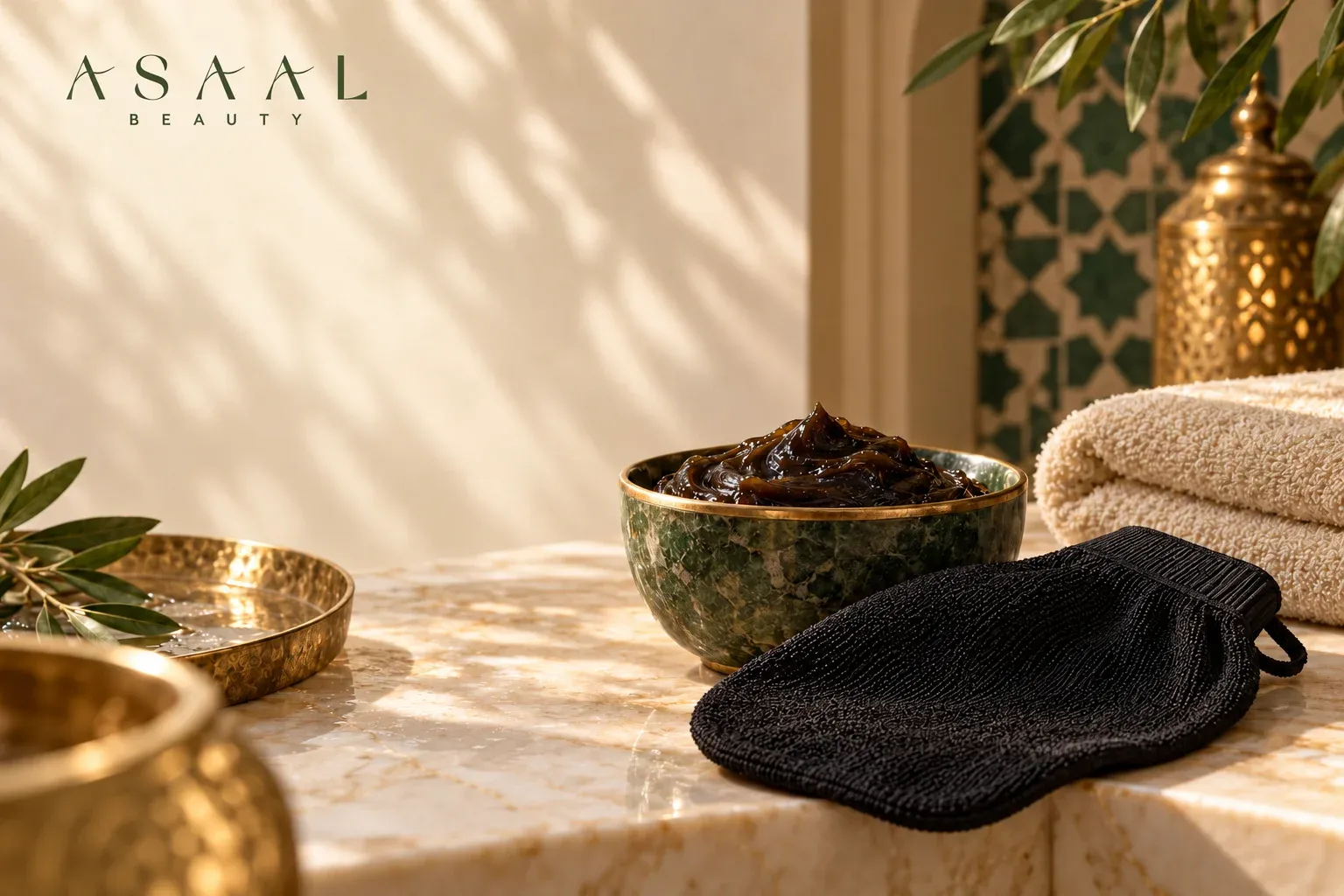
A practical guide to using Moroccan black soap and a Kessa glove at home, with step-by-step instructions, gentle exfoliation tips, and aftercare advice.
How to Use Moroccan Black Soap with a Kessa Glove: A Step-by-Step Home Guide
The Moroccan hammam is a traditional body-care ritual that brings together cleansing, exfoliation, and moisturizing. Moroccan black soap and the Kessa exfoliating glove are two of its most recognizable essentials.
However, knowing how to use Moroccan black soap correctly matters just as much as choosing the products themselves. Should a Kessa glove be used before or after the soap? How often is exfoliation appropriate? And can aggressive scrubbing cause more harm than good?
This guide from Asaal Beauty explains how to enjoy a Moroccan-inspired hammam at home, with practical steps for cleansing, gentle exfoliation, and aftercare.
How to use Moroccan black soap with a Kessa glove
Wet the body with comfortably warm water, then apply Moroccan black soap to damp skin and massage gently. Rinse thoroughly before using a clean, damp Kessa glove with short, light strokes. Rinse once more, pat the skin dry, and finish with a suitable moisturizer.
The most important principle is simple: gentle exfoliation is better than aggressive scrubbing.
Excessive friction can cause irritation, dryness, and redness rather than improving the skin's appearance.
What is Moroccan black soap?
Moroccan black soap, also known as savon beldi, is a traditional body-cleansing product closely associated with the Moroccan hammam.
It generally has a soft, paste-like texture and is used during the cleansing stage of the bathing ritual.
Formulations vary by manufacturer. Some follow traditional recipes, while others include additional botanical oils.
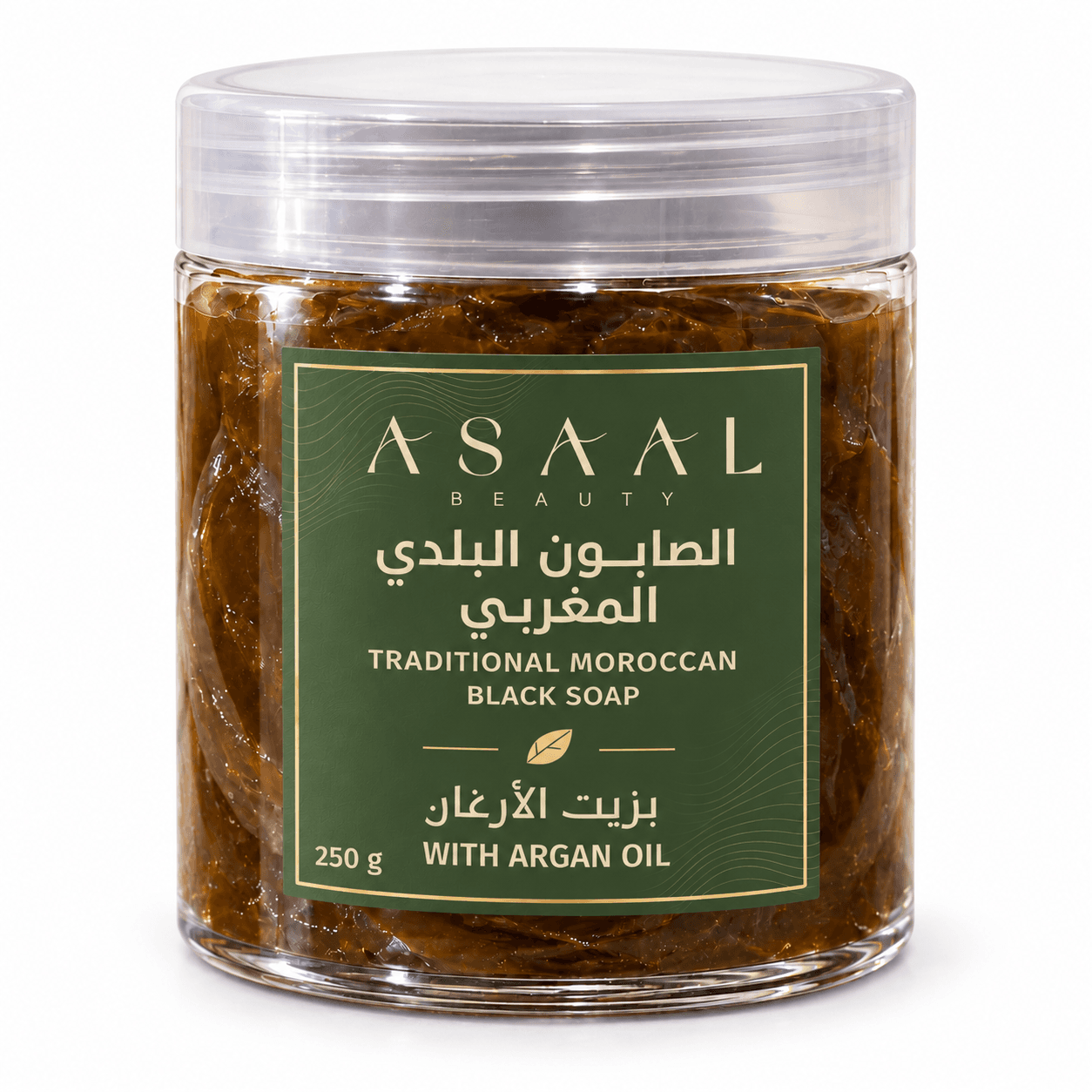
Asaal Beauty Moroccan Black Soap with Argan Oil combines Moroccan-inspired body care with argan oil in a 250 g product designed for cleansing and hammam routines.
What is the difference between Moroccan black soap and a Kessa glove?
Although they are commonly used together, they perform different functions.
Moroccan black soap: Cleanses the body as part of the bathing routine.
Kessa glove: Provides mechanical exfoliation through gentle friction, helping remove accumulated dead skin cells from the skin's surface.
The glove is optional. Depending on skin sensitivity, cleansing without mechanical exfoliation may be a more comfortable choice.
What do you need for a Moroccan hammam at home?
A Moroccan-inspired bath does not require a professional steam room or complicated equipment.
The essentials include:
- Moroccan black soap formulated for body use.
- A clean Kessa exfoliating glove.
- Comfortably warm water.
- A soft towel.
- A suitable body moisturizer, with an optional body-care oil.
Having these items ready before showering makes the routine more convenient.
Moroccan hammam at home: Step-by-step instructions
Step 1: Prepare the skin with warm water
Begin by wetting the body with comfortably warm water for a few minutes.
This prepares the skin for cleansing without requiring prolonged steam exposure.
Avoid very hot water, particularly when dealing with dry skin, as it can contribute to moisture loss and discomfort.
Step 2: Apply Moroccan black soap
Apply an appropriate amount of Moroccan black soap to damp skin.
Massage gently with the hands, distributing the product evenly across the areas being cleansed.
A thick layer is not necessary. Proper application is more important than excessive product use.
How long should Moroccan black soap be left on the skin?
Follow the manufacturer's instructions. Recommended contact times may differ between formulations, and leaving the soap on longer does not guarantee better results.
Asaal Beauty's Moroccan Black Soap with Argan Oil is used by applying it to damp skin, massaging gently, and rinsing thoroughly, without requiring an extended waiting period in its published usage steps.
Step 3: Rinse thoroughly
Rinse the body with warm water to remove the soap.
For the method described here, the Kessa glove is used after the soap has been rinsed off.
Separating cleansing from mechanical exfoliation makes it easier to control pressure and reduce unnecessary friction.
Step 4: Exfoliate gently with the Kessa glove
Wet the Kessa glove and squeeze out excess water.
Use short, light strokes on areas that tolerate exfoliation, such as the arms and legs.
Avoid excessive pressure, repeated scrubbing of the same area, and contact with broken or irritated skin.
Three points are worth remembering:
- Harder scrubbing does not guarantee better exfoliation.
- Visible rolls of dead skin are not required for an effective routine.
- Stop if pain, burning, or noticeable redness develops.
Mechanical exfoliation can be too harsh for certain skin types, so the glove should be omitted whenever it causes irritation.
Step 5: Rinse and pat dry
After exfoliating, rinse the body to remove any remaining residue.
Pat the skin dry with a soft towel instead of rubbing vigorously.
Leaving the skin slightly damp can help prepare it for the moisturizing step.
Step 6: Moisturize after the hammam
Moisturizing is an important part of the routine, especially for skin prone to dryness.
Apply a suitable body cream while the skin is still slightly damp.
An oil can also be incorporated depending on individual skin needs.
Asaal Beauty Organic Moroccan Argan Oil is a 100% pure, cold-pressed oil suitable for various hair and skin-care uses.
A small amount can be applied as part of a body-care routine, particularly to areas that feel dry.
For very dry skin, an appropriate moisturizing cream may still be necessary rather than relying on oil alone.
How often should you use Moroccan black soap and a Kessa glove?
The appropriate exfoliation frequency depends on skin type, sensitivity, and tolerance.
A gentle session once a week or less may be a reasonable starting point for skin that tolerates mechanical exfoliation. The frequency can then be adjusted according to the skin's response.
Sensitive or very dry skin may not tolerate a Kessa glove at all.
If persistent redness, dryness, or irritation develops, stop exfoliating until the skin has recovered.
Remember that cleansing with Moroccan black soap and exfoliating with a glove are separate steps. They do not necessarily need to be performed at the same frequency.
Does Moroccan black soap lighten skin?
Moroccan black soap is sometimes associated with skin-lightening claims, but cleansing and exfoliation should not be confused with changing natural skin pigmentation.
Gentle exfoliation may improve skin texture by removing some accumulated surface cells, leaving the skin feeling smoother.
However, Moroccan black soap is not an established treatment for melasma, hyperpigmentation, or changing natural skin color.
Aggressive exfoliation may even cause irritation that contributes to post-inflammatory hyperpigmentation in susceptible individuals.
Moroccan black soap is best viewed as part of a cleansing and body-care routine rather than a pigmentation treatment.
Common Moroccan black soap mistakes to avoid
Scrubbing too aggressively
Excessive pressure can irritate the skin and does not guarantee better results. Gentle movements are preferable.
Using excessively hot water
Very hot water may worsen dryness. Choose comfortably warm water instead.
Combining several strong exfoliants
Using a Kessa glove alongside strong chemical exfoliants or certain active skincare treatments can increase irritation risk.
Exfoliating damaged or irritated skin
Avoid exfoliating open wounds, sunburned areas, inflamed skin, or recently shaved areas that are irritated.
Skipping moisturizer
Applying moisturizer after showering helps support skin comfort and reduce dryness.
Neglecting Kessa glove hygiene
Rinse the glove thoroughly after use and let it dry in a well-ventilated area. Avoid sharing it and replace it when worn or damaged.
Frequently asked questions
Should you use a Kessa glove before or after Moroccan black soap?
In this routine, Moroccan black soap is applied first and rinsed thoroughly. A damp Kessa glove is then used gently for exfoliation.
Can Moroccan black soap be used without a Kessa glove?
Yes. Black soap formulated for body cleansing can be used without mechanical exfoliation, according to the product's instructions and individual skin tolerance.
Can Moroccan black soap be used every day?
This depends on the formulation and skin tolerance. Daily Kessa-glove exfoliation is generally not recommended, particularly for sensitive or dry skin.
Can Moroccan black soap be used on the face?
Only use it on the face if the manufacturer specifically identifies it as suitable for facial use. A rough Kessa glove should not be used on delicate facial skin.
Is Moroccan black soap suitable for sensitive skin?
Suitability depends on the ingredients and individual skin condition. Test a small area first and avoid abrasive exfoliation when the skin is easily irritated.
Should visible dead skin appear during exfoliation?
No. Visible residue is not required for an effective routine and should never be used as a reason to scrub more forcefully.
What should you apply after a Moroccan hammam?
A suitable body moisturizer is recommended. Argan oil may be added to the routine depending on skin needs, but it is not a mandatory replacement for moisturizing cream.
Make the Moroccan hammam part of your body-care routine
The Moroccan hammam is not about achieving the strongest possible exfoliation. It is about combining cleansing, appropriate exfoliation, and moisturizing into a comfortable body-care experience.
Explore Moroccan-inspired essentials from Asaal Beauty:
- Moroccan Black Soap with Argan Oil — 250 g, for body cleansing as part of a hammam-inspired routine.
- Organic Moroccan Argan Oil — 30 ml and 100 ml, for versatile care of hair, skin, and dry areas.
Asaal Beauty — Moroccan-inspired care, thoughtfully designed for everyday routines.
Curated Picks for Your Ritual
Handpicked recommendations to complete what you started in this article.