150
Moroccan Black Soap Benefits for Skin: Exfoliation, Dead Skin Removal, and Softer Skin
Explore Moroccan black soap benefits, the role of a Kessa glove in exfoliation, skin-brightening care, and an argan oil-enriched hammam routine.
Moroccan Black Soap Benefits for Skin: Exfoliation, Dead Skin Removal, and Softer Skin
Moroccan black soap is one of the signature essentials of the traditional Moroccan hammam. Known as Savon Beldi, it cleanses the body and forms part of an exfoliating ritual designed to remove dead skin cells and leave skin feeling smoother and refreshed.
But what are the real benefits of Moroccan black soap? Does it brighten the appearance of skin? How does it work with a Kessa glove? And what makes a formula enriched with argan oil special?
In this guide from Asaal Beauty, discover the benefits of Moroccan black soap and how to make it part of a simple, effective body-care routine.
What are the benefits of Moroccan black soap?
Moroccan black soap offers several advantages as part of a traditional body-care ritual:
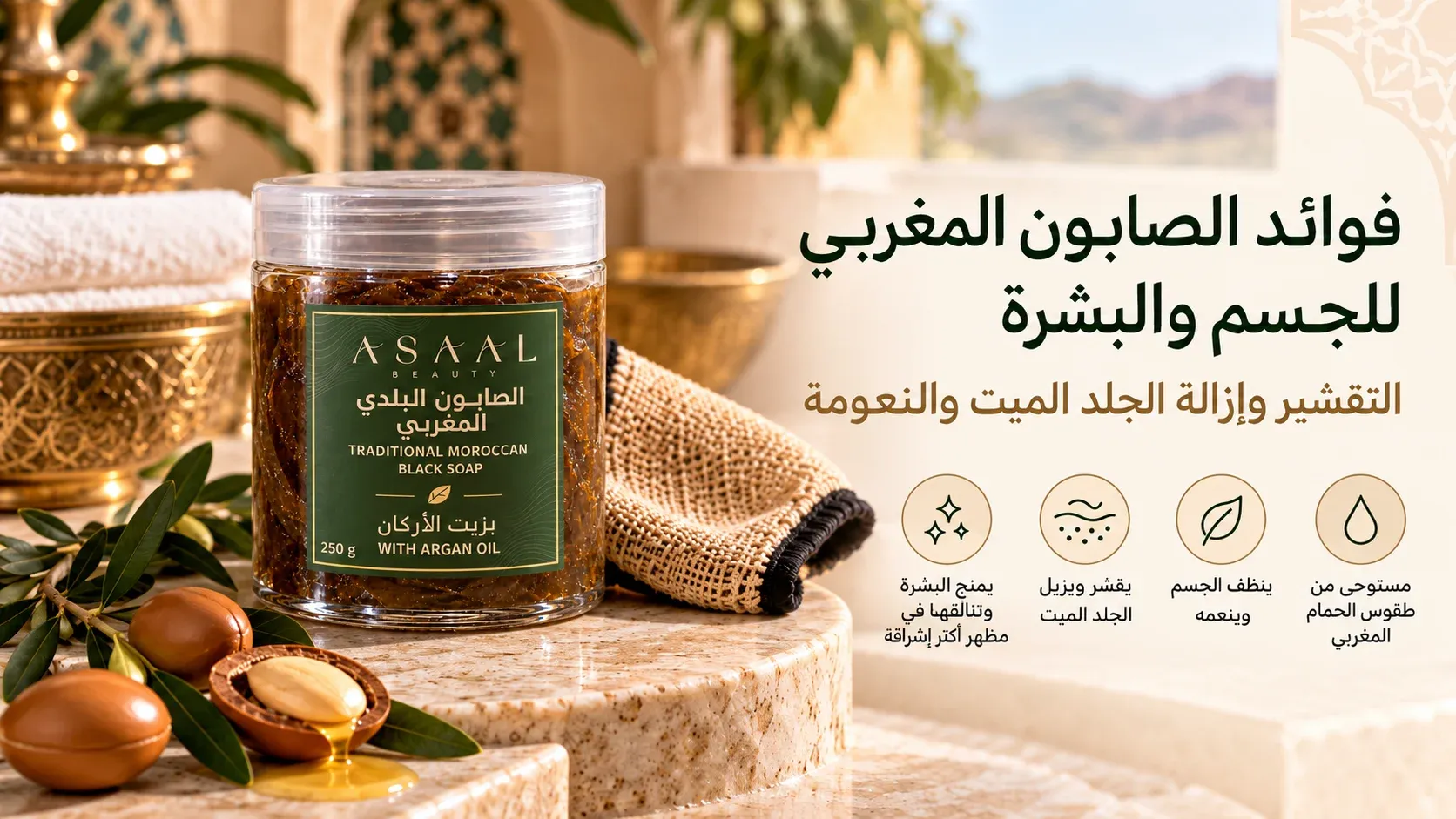
- Exfoliates dead skin: Used with a Kessa glove to remove accumulated surface cells.
- Cleanses the body: Washes away surface dirt, oils, and residue.
- Leaves skin softer: Supports a smoother skin texture after exfoliation.
- Enhances skin radiance: Removing surface buildup can reveal a fresher, more even-looking appearance.
- Refreshes rough areas: Fits into a body-care routine for elbows, knees, arms, and legs.
- Brings the hammam experience home: Makes traditional Moroccan-inspired care part of an everyday routine.
What is Moroccan black soap?
Moroccan black soap, or Savon Beldi, is a traditional Moroccan body-cleansing product with a typically soft, paste-like texture.
Traditional formulas are associated with olive-derived ingredients, while modern versions may include additional botanical oils such as argan oil.
It is commonly used as the cleansing stage of a Moroccan hammam ritual, followed by gentle exfoliation and moisturizing.
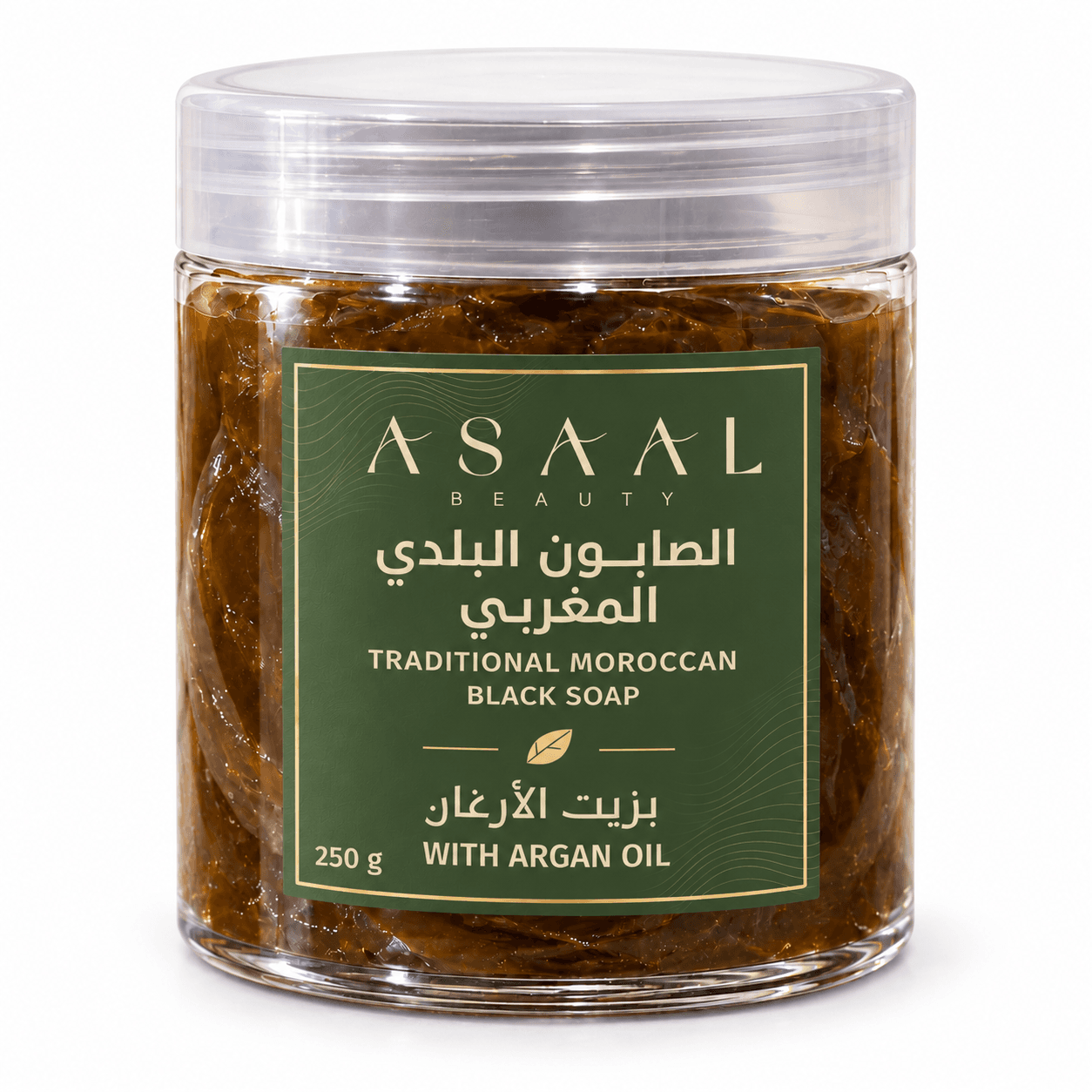
Asaal Beauty Moroccan Black Soap with Argan Oil, 250 g brings this Moroccan-inspired experience into your home.
Moroccan black soap benefits explained
1. Exfoliates and removes dead skin cells
Exfoliation is one of the best-known uses of Moroccan black soap.
When combined with a damp Kessa glove, the routine removes accumulated dead skin cells from the skin's surface.
The soap cleanses the body, while the glove provides the mechanical exfoliation.
Together, they form a traditional hammam body-care routine for smoother-feeling skin.
2. Leaves the skin feeling softer
After removing surface buildup, the skin often feels smoother.
Applying a suitable moisturizer afterward helps maintain softness and comfort, particularly on dry areas such as elbows and knees.
3. Cleanses and refreshes the body
Moroccan black soap removes surface dirt and oils during bathing.
This cleansing step leaves the body feeling refreshed and ready for optional exfoliation.
4. Enhances the appearance of skin radiance
Accumulated surface cells can make skin appear dull or rough.
Gentle exfoliation can improve the appearance of skin texture and reveal a fresher, more radiant-looking surface.
This is why Moroccan black soap is often associated with body brightening.
Improving the appearance of dull surface skin is different from treating deep pigmentation or changing natural skin color.
5. Complements the Moroccan hammam experience
Moroccan black soap can be used during a regular shower without the need for a professional steam room.
The routine combines cleansing, occasional Kessa-glove exfoliation, and moisturizing for a refreshing home spa experience.
Does Moroccan black soap brighten skin?
Moroccan black soap is popular in body-brightening routines because exfoliation removes accumulated surface dead skin cells.
When surface buildup is removed, the skin may appear fresher, smoother, and more even-looking.
The effect is particularly noticeable on areas that feel rough or dry.
For persistent pigmentation concerns, a separate skincare approach may be needed.
What about dark knees and elbows?
Elbows and knees are often exposed to dryness and friction.
Moroccan black soap can be incorporated into a gentle cleansing and exfoliating routine, followed by moisturizing to improve softness and surface appearance.
What does argan oil add to Moroccan black soap?
Argan oil is a well-known Moroccan botanical oil naturally containing fatty acids and vitamin E compounds.
Adding argan oil creates a distinctive soap formulation inspired by traditional Moroccan body care.
Asaal Beauty Moroccan Black Soap with Argan Oil combines this ingredient with a rich-textured body cleanser designed for a hammam-inspired routine.
Why choose Asaal Beauty Moroccan Black Soap?
- Exfoliates dead skin as part of a Kessa-glove routine.
- Cleanses and refreshes the body.
- Leaves skin feeling softer.
- Contains argan oil.
- Features a rich Moroccan-inspired texture.
- Comes in a convenient 250 g size.
Explore Asaal Beauty Moroccan Black Soap with Argan Oil.
Is Moroccan black soap suitable for different skin types?
Dry skin
Use a comfortable water temperature, exfoliate gently, and follow with a body moisturizer. Avoid over-scrubbing areas prone to dryness.
Oily skin
Moroccan black soap can be part of a body-cleansing routine to remove surface oils and buildup.
Normal skin
The soap can be incorporated into regular body care, with exfoliation added as needed.
Sensitive skin
Introduce the product carefully and avoid rough exfoliation if the skin is easily irritated.
Moroccan black soap vs. regular soap
Texture: Moroccan black soap is usually soft and paste-like, while regular soap is often solid or liquid.
Common use: Moroccan black soap is used for Moroccan hammam body cleansing and exfoliation, while regular soap is used for everyday cleansing.
Kessa glove: Moroccan black soap is traditionally paired with a Kessa glove, which is not usually required for regular soap.
Body-care experience: The Moroccan routine combines cleansing, exfoliation, and moisturizing, while conventional soap routines usually focus on cleansing.
Formula: Moroccan black soap is traditionally olive-derived and may be enriched with argan oil; regular soaps vary in composition.
Moroccan black soap is especially popular among people who enjoy a complete hammam-inspired body-care routine.
How to use Moroccan black soap for smoother skin
- Wet the body with comfortably warm water.
- Apply Moroccan black soap to damp skin and massage gently.
- Rinse the soap thoroughly.
- Use a damp Kessa glove with light strokes if your skin tolerates exfoliation.
- Rinse, pat dry, and apply a suitable moisturizer.
- Optionally add argan oil to the after-shower routine.
For detailed instructions, read How to Use Moroccan Black Soap with a Kessa Glove.
How often should you use Moroccan black soap?
Soap-cleansing frequency depends on the formulation and skin tolerance.
For Kessa-glove exfoliation, starting once weekly or less is often appropriate, with adjustments based on individual skin response.
A gentle routine is more effective than excessive friction.
When can you notice results?
The body can feel clean and refreshed immediately after washing.
A smoother feel may be noticeable after gentle exfoliation and moisturizing.
Regular care helps maintain a comfortable and soft skin texture.
Common mistakes to avoid
Scrubbing too hard: Gentle exfoliation is preferable to abrasive rubbing.
Using excessively hot water: Choose comfortably warm water.
Skipping moisturizer: Moisturizing supports softness after bathing.
Exfoliating irritated skin: Allow irritated areas to recover first.
Not cleaning the glove: Rinse and dry the Kessa glove properly after each use.
Frequently asked questions
Does Moroccan black soap exfoliate skin?
Yes. Moroccan black soap is used in traditional body-exfoliating routines, particularly when paired with a Kessa glove for mechanical removal of dead skin cells.
Does Moroccan black soap remove dead skin?
Yes, removing dead skin cells is a key part of the Moroccan hammam routine that combines black soap with a Kessa glove.
Can Moroccan black soap brighten skin?
Exfoliating accumulated surface cells can improve skin radiance and produce a smoother, fresher-looking appearance.
Can Moroccan black soap improve the appearance of dark elbows and knees?
Gentle exfoliation and moisturizing can improve surface texture and the appearance of dry, rough areas. Results depend on the cause of discoloration.
Can Moroccan black soap be used without a Kessa glove?
Yes. It can be used for body cleansing on its own.
Is Moroccan black soap suitable for men and women?
Yes. It is a body-care product suitable according to individual skin needs rather than gender.
Can Moroccan black soap be used on the face?
Follow the specific product directions. Rough body Kessa gloves should not be used on facial skin.
Can argan oil be applied after using Moroccan black soap?
Yes. Asaal Beauty Organic Moroccan Argan Oil can be used as an optional part of after-shower body care.
Discover Moroccan-inspired body care with Asaal Beauty
Moroccan black soap brings together cleansing, dead skin exfoliation, softness, and the traditions of the Moroccan hammam.
Discover Asaal Beauty Moroccan Black Soap with Argan Oil — 250 g and enjoy a refreshing body-care ritual at home.
Complete the experience with Asaal Beauty Organic Moroccan Argan Oil, available in 30 ml and 100 ml sizes.
Asaal Beauty — Moroccan beauty rituals, made for everyday care.
Sources and further reading
Curated Picks for Your Ritual
Handpicked recommendations to complete what you started in this article.